Blog

  • Should You Use a VPN for Online Banking?

    Should You Use a VPN for Online Banking?

    Yes, you can use a VPN for online banking, especially when you are on public Wi-Fi, traveling, or using a network you do not fully trust.

    A VPN helps protect your connection by creating an encrypted tunnel between your device and the VPN service. This makes it harder for people on the same network to see or interfere with your activity at the network level.

    But there is one important detail:

    A VPN is useful for online banking, but it does not replace safe banking habits.

    It can help protect your connection.
    It can help hide your real IP address.
    It can reduce risk on public Wi-Fi.

    But it cannot stop phishing, fake banking apps, weak passwords, malware, or mistakes like entering your login details on a fake website.

    The safest approach is simple:

    Use a VPN when banking on public Wi-Fi, but also use the official bank app, strong passwords, two-factor authentication, HTTPS, and a trusted device.

    If you are at an airport, hotel, cafe, mall, or coworking space, turn on your VPN before opening your banking app or website.

    For public network safety in general, read Should You Use a VPN on Public Wi-Fi?

    Why Online Banking Requires Extra Caution

    Online banking is one of the most sensitive things you do online.

    You are not just reading content or browsing casually. You may be checking balances, moving money, paying bills, entering passwords, approving transfers, or viewing personal financial details.

    That makes banking different from normal browsing.

    If something goes wrong, the risk is higher.

    The main risks include:

    Stolen login details
    Fake banking websites
    Fake banking apps
    Public Wi-Fi snooping
    Phishing messages
    Malware on your device
    Weak or reused passwords
    Someone looking over your shoulder
    Account alerts from unusual locations

    Most banks already use strong security. Banking websites and apps usually use encryption, fraud detection, and account monitoring.

    But you still control the device, network, password, and browsing behaviour.

    That is where a VPN can help as one privacy layer.

    It does not replace your bank’s security. It adds protection around your connection.

    How a VPN Helps With Online Banking

    A VPN helps protect online banking mainly by protecting the connection between your device and the VPN server.

    This is especially useful when you are not on a trusted network.

    It Encrypts Your Connection on Public Wi-Fi

    Public Wi-Fi is shared.

    At airports, hotels, cafes, universities, and malls, many people may be connected to the same network. You usually do not know who manages it or how secure it is.

    A VPN encrypts your traffic before it moves across the network.

    That means the Wi-Fi owner or someone abusing the local network should not be able to easily inspect your banking activity inside the VPN tunnel.

    It Helps Hide Your Real IP Address

    When you use a VPN, websites usually see the VPN connection instead of your real IP address.

    This can reduce direct exposure of your real network location and internet provider.

    For online banking, this can be useful when you are traveling or connecting from public networks.

    It Reduces Local Network Snooping

    If you are on a shared Wi-Fi network, a VPN helps reduce what others on that network can see.

    This matters when you are checking bank accounts, opening financial apps, or entering personal information.

    It Adds Protection Before You Log In

    The best time to turn on a VPN is before you open your banking app or website.

    Do not wait until after you enter your password.

    Connect to the network.
    Turn on your VPN.
    Open your banking app or official bank website.

    That order is safer.

    When Banks May Flag VPN Usage

    A VPN can help protect your connection, but banks may sometimes treat VPN usage as unusual.

    This does not mean the VPN is unsafe.

    It usually means the bank is trying to protect your account.

    Banks may flag VPN usage because your visible location or IP address can change. If your bank normally sees you logging in from one city or country, and suddenly sees a different location, its security system may ask for extra verification.

    You may see:

    Extra login verification
    One-time passcode request
    Security question
    Temporary login block
    Suspicious activity alert
    Account confirmation email
    Request to verify your device

    This can also happen when you travel, use a new device, clear cookies, switch networks, or log in from a new browser.

    What to do if your bank flags your VPN

    Do not panic.

    Use the bank’s official verification method.

    Open the official banking app or type the bank’s website address yourself.

    Avoid clicking links from random emails or texts claiming there is an urgent banking problem.

    If the bank blocks VPN access completely, use mobile data or a trusted private network instead of turning off your VPN on public Wi-Fi for sensitive activity.

    The goal is not to force the VPN at all costs.

    The goal is to bank safely.

    Should You Bank on Public Wi-Fi With a VPN?

    If possible, avoid banking on public Wi-Fi and use mobile data instead.

    Mobile data is often a better option because you are not joining a shared local network.

    But sometimes you may need to bank while travelling, waiting at an airport, sitting in a hotel lobby, or working from a cafe.

    In that case, using a VPN is better than banking on public Wi-Fi unprotected.

    Here is the safer approach:

    Confirm the Wi-Fi network name.
    Avoid suspicious captive portals.
    Turn on your VPN before banking.
    Use the official bank app or typed website address.
    Check HTTPS if using a browser.
    Use two-factor authentication.
    Avoid banking if the network feels suspicious.
    Log out when finished.

    If you travel often, read Is Airport Wi-Fi Safe? before banking or working at airports.

    What a VPN Cannot Protect During Online Banking

    A VPN is helpful, but it does not protect against every banking risk.

    This is where users need a realistic answer.

    A VPN Cannot Stop Phishing

    A VPN cannot tell whether a website is fake.

    If you click a fake banking link and enter your password, the VPN cannot undo that.

    Always open your bank from the official app or by typing the website address yourself.

    A VPN Cannot Protect a Compromised Device

    If your phone or laptop has malware, a VPN cannot make it safe.

    Keep your device updated and avoid installing unknown apps or files.

    A VPN Cannot Fix Weak Passwords

    If your banking password is weak or reused, a VPN will not protect the account from password-based attacks.

    Use a strong, unique password for your bank.

    A VPN Cannot Stop Fake Banking Apps

    A VPN does not verify whether an app is legitimate.

    Only download banking apps from the official app store, and confirm the developer name before installing.

    A VPN Cannot Hide What You Share With Your Bank

    If you log into your bank, the bank knows it is you.

    That is normal.

    A VPN can protect your connection and hide your real IP from direct exposure, but it does not make you anonymous to your bank.

    For a simple privacy breakdown, read What Does a VPN Hide?

    Online Banking Safety Checklist

    Use this checklist before logging into your bank account.

    1. Use the Official Bank App or Website

    The safest habit is to use your bank’s official app.

    If you use a browser, type the website address yourself.

    Do not click banking links from random emails, texts, ads, or social media messages.

    2. Check HTTPS

    If you use a browser, make sure the website uses HTTPS.

    A VPN helps protect your connection, but HTTPS is still important for secure communication with the bank website.

    3. Turn On Two-Factor Authentication

    Two-factor authentication adds a second step before someone can access your account.

    Use your bank’s strongest available option.

    4. Use a Strong Password

    Do not reuse your banking password anywhere else.

    A bank password should be unique, long, and hard to guess.

    5. Avoid Unknown Public Wi-Fi

    If the Wi-Fi name looks suspicious, do not use it for banking.

    Use mobile data instead.

    6. Turn On Your VPN Before Banking

    If you must use public Wi-Fi, turn on your VPN before opening the banking app or website.

    7. Watch Your Screen

    Banking security is not only digital.

    If you are in an airport, cafe, train station, or hotel lobby, make sure nobody nearby can see your screen or keyboard.

    8. Log Out When Finished

    After banking, log out of the app or website.

    This is especially important on shared or public networks.

    9. Keep Your Device Updated

    Install updates for your phone, laptop, browser, and banking app.

    Updates often fix security problems.

    VPN for Online Banking: Good vs Risky Situations

    Situation Should You Use a VPN? Better Choice
    Banking on home Wi-Fi Optional Use trusted Wi-Fi, strong password, 2FA
    Banking on airport Wi-Fi Yes VPN first, or use mobile data
    Banking at a hotel Yes VPN first, confirm network name
    Banking at a cafe Yes VPN first, avoid shoulder surfing
    Banking on mobile data Optional Usually safer than unknown public Wi-Fi
    Banking on suspicious Wi-Fi Avoid Use mobile data instead
    Banking from a shared/public computer Avoid Use your own trusted device
    Banking after clicking an email link Avoid Open the bank app or website manually

    The best rule:

    Use the safest network available. If you must use public Wi-Fi, use a VPN first.

    Can a VPN Cause Banking Problems?

    Sometimes, yes.

    A VPN can cause extra banking checks because your IP address or location may look different from usual.

    This can trigger bank security systems.

    You may need to verify your identity more often.

    This is not always a bad thing. It means the bank is watching for unusual access.

    To reduce problems:

    Use the official bank app.
    Use a consistent VPN location when possible.
    Avoid switching locations repeatedly during banking.
    Keep your phone number and recovery email updated.
    Do not use suspicious free public Wi-Fi for banking.
    Use mobile data if the bank blocks VPN traffic.

    The key is balance.

    A VPN helps protect your connection, but your bank also needs to detect unusual login behaviour.

    How KlarVPN Helps With Safer Banking on Public Networks

    KlarVPN is built for people who want privacy without blind trust.

    When you need to bank on public Wi-Fi, KlarVPN helps protect your connection through your own encrypted tunnel. That gives your banking session a safer path before traffic moves across a network you do not fully control.

    KlarVPN also includes a live transparency dashboard, so users can better understand what exists in KlarVPN’s system and what it does not keep.

    KlarVPN is built around:

    Your own encrypted tunnel
    Live transparency dashboard
    Refresh Tunnel
    Kill Switch + Auto-Connect
    No browsing history
    No IP destination logs
    No DNS queries
    No behavioural profiles

    For online banking, Kill Switch and Auto-Connect are especially useful.

    Auto-Connect helps activate VPN protection when you join a network.

    Kill Switch helps prevent traffic from leaving your device unprotected if the VPN connection drops.

    Refresh Tunnel gives users more control by rebuilding the tunnel with new encryption keys, a new IP address, and a refreshed tunnel fingerprint.

    The goal is simple:

    Sensitive browsing should not depend on blind trust.

    KlarVPN helps make the protection clearer before you log in.

    Final Answer: Should You Use a VPN for Online Banking?

    Yes, using a VPN for online banking can be a good idea, especially on public Wi-Fi or networks you do not fully trust.

    A VPN helps encrypt your connection, reduce local network snooping, and hide your real IP address from direct exposure.

    But a VPN is not a complete banking security solution.

    It cannot stop phishing, fake apps, weak passwords, malware, or unsafe login behaviour.

    For the safest online banking experience:

    Use the official bank app.
    Turn on your VPN on public Wi-Fi.
    Use HTTPS.
    Enable two-factor authentication.
    Use strong passwords.
    Keep your device updated.
    Avoid suspicious networks.
    Use mobile data when public Wi-Fi feels risky.

    Try KlarVPN before banking on public Wi-Fi and browse through your own encrypted tunnel with visible privacy, Kill Switch, Auto-Connect, and no activity logs.

    FAQs

    Is it safe to use a VPN for banking?

    Yes, it is generally safe to use a VPN for banking, especially on public Wi-Fi. A VPN helps protect your connection, but you should still use the official bank app, strong passwords, two-factor authentication, and a trusted device.

    Can banks block VPNs?

    Yes, some banks may block or flag VPN connections because the IP address or location looks unusual. If this happens, use the bank’s official verification process or switch to mobile data or a trusted private network.

    Should I use a VPN on public Wi-Fi for banking?

    Yes. If you must bank on public Wi-Fi, turn on your VPN first. If mobile data is available, that may be the safer option for sensitive banking.

    Can a VPN stop phishing?

    No. A VPN cannot stop you from entering your password on a fake banking website. Always use the official bank app or type the bank website address yourself.

    Is mobile banking safer with a VPN?

    Mobile banking can be safer with a VPN when you are using public Wi-Fi or an untrusted network. On mobile data, a VPN can still add privacy, but the most important steps are using the official app, 2FA, and a secure device.
  • Is Airport Wi-Fi Safe?

    Is Airport Wi-Fi Safe?

    Airport Wi-Fi can be useful, but you should treat it as a shared public network with extra caution.

    It is usually fine for simple browsing, checking flight updates, reading news, using maps, or messaging. But you should be more careful when logging into email, banking apps, work tools, cloud storage, or any account that contains private information.

    The main issue is simple:

    You do not fully control airport Wi-Fi.

    You may not know who manages the network, who else is connected, whether the network name is real, or how secure the setup is.

    That does not mean you should never use airport Wi-Fi. It means you should use it carefully.

    The safest habit is:

    Confirm the network name, turn on your VPN, avoid suspicious login pages, and do not handle sensitive activity unless your connection is protected.

    If you are travelling and need to connect, airport Wi-Fi is convenient. Just do not treat it like your home network.

    Why Airport Wi-Fi Needs Extra Caution

    Airports are busy, open, and full of people connecting from different devices.

    Travellers use airport Wi-Fi for many reasons:

    Checking flight status
    Messaging family
    Using maps
    Opening boarding passes
    Booking hotels
    Checking email
    Working between flights
    Streaming while waiting
    Managing banking or travel payments

    That makes airport Wi-Fi valuable, but also risky.

    Unlike your home network, airport Wi-Fi is designed for public access. Many people connect for a short time, and you usually do not know what security controls are in place.

    The risk is not always that someone is actively attacking you.

    The risk is that the environment is shared, crowded, and hard to verify.

    For a broader guide, read Should You Use a VPN on Public Wi-Fi?

    Common Airport Wi-Fi Risks

    Airport Wi-Fi has many of the same risks as other public Wi-Fi networks, but travel makes users more vulnerable because they are often tired, rushed, distracted, or trying to solve urgent problems.

    Fake Wi-Fi Network Names

    One of the biggest airport Wi-Fi risks is connecting to the wrong network.

    A fake hotspot may use a name that looks official, such as:

    Airport Free Wi-Fi
    Terminal Guest Wi-Fi
    Free Airport Internet
    Airport Lounge Wi-Fi

    If you connect to a fake network, your traffic may pass through a network controlled by someone else.

    Before joining airport Wi-Fi, always confirm the official network name from airport signage, staff, airline lounge information, or the airport’s official website.

    Crowded Networks

    Airport Wi-Fi can become crowded quickly.

    Hundreds or thousands of people may connect during busy hours. Crowded networks can create slow speeds, connection drops, and unstable browsing.

    Crowding is not only annoying. It can also make users rush through security warnings, captive portal screens, or login pages without thinking.

    Slow Wi-Fi makes people careless.

    And careless browsing is where many privacy mistakes happen.

    Captive Portals

    Many airports use captive portals. These are the pages that appear before you can access the internet.

    They may ask you to accept terms, enter an email, watch an ad, or choose a free session.

    Captive portals are common, but you should be careful if the page asks for too much information.

    Be cautious if a captive portal asks for:

    Payment card details for “free” access
    Unnecessary personal information
    App installation
    Unusual permissions
    Account passwords
    Social media login
    Security certificate installation

    A normal Wi-Fi access page should not ask for sensitive information just to let you browse.

    Shoulder Surfing

    Airport security is not only digital.

    Airports are crowded places. People may be sitting close to you, standing behind you, or walking past while you use your phone or laptop.

    If you open banking apps, work dashboards, private emails, or password managers in public, someone nearby may see your screen.

    A VPN cannot stop shoulder surfing.

    Use a privacy screen, lower your brightness, avoid opening sensitive pages in crowded areas, and be aware of who can see your device.

    Rushed Travel Decisions

    Travel creates pressure.

    You may need to book a hotel quickly, pay for baggage, check a work message, or fix a missed connection.

    That urgency makes people more likely to click the first network, accept the first portal, or ignore browser warnings.

    Slow down before connecting.

    A few seconds of checking can prevent a bigger privacy problem.

    What You Can Safely Do on Airport Wi-Fi

    Airport Wi-Fi is not automatically dangerous. Many everyday activities are low risk if you use basic precautions.

    You can usually use airport Wi-Fi for:

    Checking flight status
    Reading news
    Browsing general websites
    Using maps
    Checking airport services
    Messaging friends or family
    Streaming entertainment
    Downloading non-sensitive travel information

    These activities are lower risk because they do not always involve private account access or sensitive data.

    Still, it is smart to turn on a VPN before browsing.

    A VPN helps protect your connection and reduces what the local network can see.

    If you want to understand exactly how VPN protection works, read Does a VPN Protect You on Public Wi-Fi?

    What to Avoid on Airport Wi-Fi

    Some activities need more care on airport Wi-Fi.

    Avoid or delay sensitive activity if the network feels suspicious, the captive portal looks strange, or you cannot verify the Wi-Fi name.

    Be careful with:

    Online banking
    Work admin dashboards
    Cloud storage
    Password manager access
    Sensitive email
    Payment forms
    Crypto wallets
    Government portals
    Private documents
    Remote work systems

    If you must use these services, turn on your VPN first, use the official app or correct website, check HTTPS, and make sure nobody nearby can see your screen.

    For banking specifically, read Should You Use a VPN for Online Banking?

    The rule is simple:

    The more sensitive the activity, the more careful you should be.

    Why Using a VPN at the Airport Helps

    A VPN helps protect your connection by creating an encrypted tunnel between your device and the VPN service.

    That tunnel helps reduce what the airport Wi-Fi network, Wi-Fi owner, or someone abusing the local network can see.

    When your VPN is on, the local network may still see that your device is connected and using data, but it should not see your browsing activity in the same direct way.

    A VPN can help with:

    Protecting traffic on shared airport Wi-Fi
    Reducing local network snooping
    Hiding your real IP address from websites
    Adding a privacy layer before you open accounts
    Making public Wi-Fi safer for travel use

    A VPN does not make airport Wi-Fi completely safe.

    It does not stop phishing, fake websites, malware, weak passwords, or someone looking over your shoulder.

    But it is one of the easiest protections to turn on before using airport Wi-Fi.

    The best time to enable it is before you start browsing, not after.

    Airport Wi-Fi Safety Checklist Before Your Flight

    Use this quick checklist before connecting at the airport.

    1. Confirm the Official Wi-Fi Name

    Do not connect to a network just because it looks real.

    Check signs, airport information screens, airline lounge instructions, or ask staff.

    Fake network names can look convincing.

    2. Avoid Unknown Hotspots

    If you see several similar network names, be careful.

    For example:

    Airport_Free_WiFi
    Airport WiFi 5G
    Free Airport Guest
    Airport Public Internet

    Do not guess. Confirm the correct one.

    3. Turn On Your VPN First

    After joining the correct network, turn on your VPN before opening email, banking, work tools, or personal accounts.

    Make this your default airport habit.

    4. Check the Captive Portal Carefully

    If the Wi-Fi login page asks for strange information, stop.

    A basic airport Wi-Fi page may ask you to accept terms. It should not need your bank details, account passwords, or unnecessary permissions.

    5. Use HTTPS Websites

    Before entering passwords or payment details, check that the website is using HTTPS.

    A VPN helps protect your connection, but you should still avoid unsafe websites.

    6. Turn Off Auto-Join

    Do not let your device automatically reconnect to airport networks later.

    Turn off auto-join for public networks after using them.

    7. Avoid Sensitive Activity if You Are Unsure

    If the Wi-Fi behaves strangely, pages redirect too much, or the network name feels suspicious, use mobile data instead.

    8. Watch Your Screen

    Be careful when typing passwords, opening private documents, or checking banking apps in crowded areas.

    Digital privacy and physical privacy both matter at airports.

    Airport Wi-Fi vs Mobile Data vs Personal Hotspot

    If you are unsure about airport Wi-Fi, you have other options.

    Option Best For Main Concern
    Airport Wi-Fi General browsing, flight updates, waiting time Shared network and fake hotspot risk
    Mobile data Safer quick browsing and personal accounts Roaming cost or weak signal
    Personal hotspot Laptop work through your own mobile connection Battery and data usage
    Offline downloads Entertainment and documents without network risk Needs preparation before travel

    Mobile data is often safer than unknown airport Wi-Fi because you are not joining a shared local network.

    A personal hotspot can also be better for work if you need a more controlled connection.

    But airport Wi-Fi is still useful when used carefully with a VPN.

    When Airport Wi-Fi Is Probably Fine

    Airport Wi-Fi is usually fine when:

    You confirm the official network name
    You only browse general websites
    You avoid suspicious captive portals
    You do not enter sensitive information
    You turn on a VPN before using accounts
    You do not ignore browser warnings
    You use HTTPS websites
    You keep your device updated

    In other words, airport Wi-Fi is manageable when you treat it as public.

    The danger comes from treating it like a trusted private network.

    When You Should Avoid Airport Wi-Fi

    Avoid airport Wi-Fi when:

    You cannot verify the network name
    The captive portal looks suspicious
    The connection redirects strangely
    The page asks for too much information
    You need to access highly sensitive accounts
    You are handling confidential work files
    You are making urgent financial transactions
    Your VPN will not connect
    Your device is outdated or already acting strangely

    In these cases, use mobile data, a personal hotspot, or wait until you are on a safer connection.

    How KlarVPN Helps on Airport Wi-Fi

    KlarVPN is built for people who want privacy without blind trust.

    Before joining airport Wi-Fi, you can turn on KlarVPN and protect your connection through your own encrypted tunnel.

    KlarVPN also includes a live transparency dashboard, so users can better understand what exists in KlarVPN’s system and what it does not keep.

    For airport use, Auto-Connect and Kill Switch are especially useful.

    Auto-Connect helps activate VPN protection when you join a network.

    Kill Switch helps block traffic if your VPN connection drops, reducing the chance of accidental exposure.

    Refresh Tunnel gives users more control by rebuilding the tunnel with new encryption keys, a new IP address, and a refreshed tunnel fingerprint.

    The goal is simple:

    Airport Wi-Fi should not force you to browse unprotected.

    KlarVPN gives travellers a clearer way to stay private before they connect.

    Final Answer: Is Airport Wi-Fi Safe?

    Airport Wi-Fi can be safe enough for simple browsing, flight updates, messaging, and general use if you take basic precautions.

    But you should treat it as a shared public network, not a private connection.

    The biggest risks are fake hotspot names, crowded networks, suspicious captive portals, shoulder surfing, and unsafe login behaviour.

    Use airport Wi-Fi carefully:

    Confirm the network name.
    Turn on your VPN first.
    Avoid sensitive activity if the network feels suspicious.
    Use HTTPS websites.
    Turn off auto-join.
    Use mobile data or a hotspot for high-risk activity.

    Before joining airport Wi-Fi, try KlarVPN free and browse through your own encrypted tunnel with visible privacy, Kill Switch, Auto-Connect, and no activity logs.

    FAQs

    Can airport Wi-Fi see my browsing?

    Airport Wi-Fi may be able to see some network-level activity if you browse without protection. A VPN helps hide browsing activity inside an encrypted tunnel, though the network may still see that your device is connected and using data.

    Should I use a VPN at the airport?

    Yes. You should use a VPN at the airport, especially before opening email, banking apps, work tools, cloud storage, or personal accounts.

    Is airport Wi-Fi safe for banking?

    It is better to use mobile data for banking if possible. If you must use airport Wi-Fi, verify the network, turn on your VPN first, use the official banking app or website, and make sure nobody can see your screen.

    How do I know if airport Wi-Fi is fake?

    Check the official network name from airport signs, airport staff, airline lounge instructions, or the airport’s website. Be careful with names that look generic or slightly different from the official one.

    Is mobile data safer than airport Wi-Fi?

    In many cases, yes. Mobile data is often safer than unknown airport Wi-Fi because you are not joining a shared local network. A VPN can still add privacy on mobile data too.

  • Dedicated VPN vs Shared VPN: What Is Better?

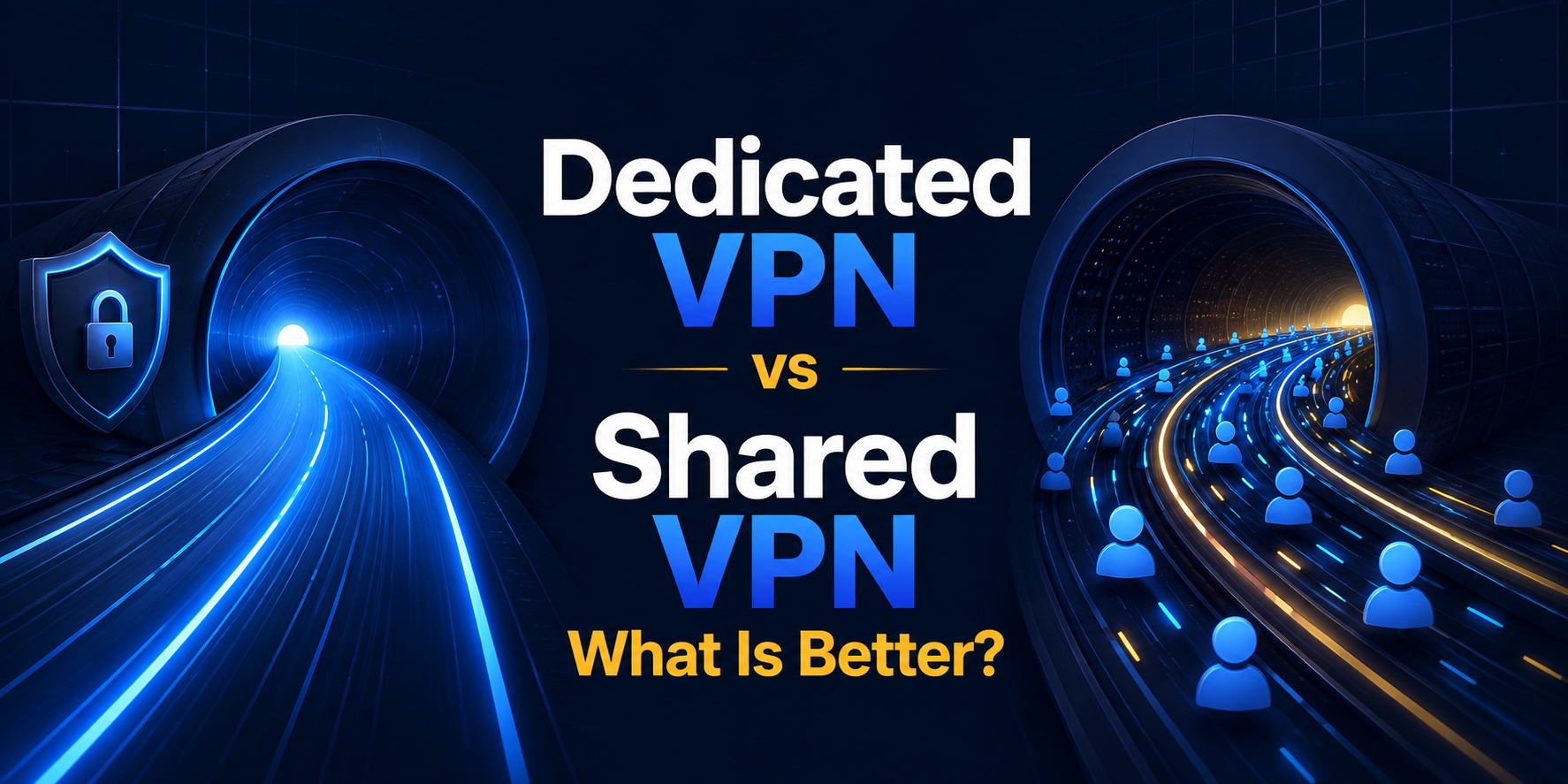
    Dedicated VPN vs Shared VPN: What Is Better?

    Shared VPNs are common, and many people use them every day. But dedicated VPN tunnels can offer a clearer, less crowded, and more controlled VPN experience.

    The better choice depends on what you need.

    If you only want basic IP masking for casual browsing, a shared VPN may be enough. But if you care about connection clarity, privacy visibility, fewer crowded-server concerns, and a VPN experience that feels more personal, a dedicated VPN tunnel can be a better option.

    The important thing is to understand the difference clearly.

    A shared VPN usually means many users are routed through shared VPN infrastructure. A dedicated VPN tunnel means your encrypted VPN tunnel is created for your connection.

    That does not automatically mean you get a dedicated IP address.

    A dedicated tunnel and a dedicated IP are different things.

    So the simple answer is:

    Shared VPNs are common and can work for basic privacy, but dedicated VPN tunnels are better for users who want a clearer, less crowded, and more transparent VPN experience.

    What Is a Shared VPN?

    A shared VPN is the most common type of VPN experience.

    In a shared VPN setup, many users connect through the same VPN infrastructure. They may use shared servers, shared resources, and often shared exit IP addresses.

    This is not automatically bad.

    Shared VPNs can help hide one user among many users. For some privacy use cases, that can be useful. It may also allow VPN companies to keep costs lower and offer more locations.

    But shared VPNs can also create problems when the infrastructure becomes crowded or poorly managed.

    Common shared VPN problems include:

    Slow speeds
    Unstable connections
    Repeated CAPTCHA checks
    Blocked logins
    Streaming errors
    Crowded servers
    Shared IP reputation issues
    Less clarity about how traffic is handled

    The biggest issue is not that shared VPNs exist.

    The issue is that many users do not know what they are sharing, how crowded it is, or why websites sometimes treat their VPN traffic as suspicious.

    That is why some users start looking for a private tunnel VPN or a dedicated VPN tunnel.

    What Is a Dedicated VPN Tunnel?

    A dedicated VPN tunnel is an encrypted VPN tunnel created for your connection.

    Instead of thinking of VPN access as one crowded pipe with many users mixed into the same experience, a dedicated tunnel gives your connection its own encrypted path.

    In simple words:

    A shared VPN experience can feel like a busy road.
    A dedicated VPN tunnel feels more like your own private lane.

    The tunnel protects your traffic between your device and the VPN service. It helps hide your real IP address from websites and helps reduce what your ISP, Wi-Fi owner, or local network can see.

    But again, this needs to be clear:

    A dedicated VPN tunnel is not the same as a dedicated IP address.

    A dedicated tunnel refers to the encrypted path used for your connection.

    A dedicated IP means one public IP address is assigned to one user.

    Those are different concepts.

    For a full beginner explanation, read What Is a Dedicated VPN Tunnel?

    Dedicated VPN vs Shared VPN: Quick Comparison

    Factor Shared VPN Dedicated VPN Tunnel
    Basic meaning Many users use shared VPN infrastructure Your connection gets its own encrypted tunnel
    Privacy Can be private, depending on provider Can feel clearer when paired with transparent privacy design
    Speed consistency May vary more if infrastructure is crowded Can feel more consistent when not treated like a crowded tunnel
    Server crowding More common concern Designed to reduce crowded-tunnel concerns
    Cost Often cheaper or common in free VPNs Can be premium, but KlarVPN offers it to free users
    IP reputation Shared IPs may be affected by other users Dedicated tunnel does not automatically mean a dedicated IP
    Setup Usually simple Should still be simple for the user
    Transparency Often depends on claims Stronger when combined with dashboards and clear privacy info
    Best for Casual browsing and basic VPN use Users who want clarity, control, and fewer crowded-server concerns

    The key difference is not only technical.

    It is about user experience.

    A shared VPN may work, but it can feel unclear.

    A dedicated VPN tunnel gives users a simpler way to understand how their connection is protected.

    Privacy: Which One Is Better?

    Both shared VPNs and dedicated VPN tunnels can improve privacy if they are built properly.

    A shared VPN can hide your real IP address from websites and reduce what your ISP or Wi-Fi owner can see. A dedicated VPN tunnel can do that too.

    So privacy does not depend only on whether the VPN is shared or dedicated.

    It also depends on:

    • Logging policy
    • DNS handling
    • Leak protection
    • App security
    • Kill switch
    • Transparency
    • Company trust
    • User settings
    • Browser behavior

    A shared VPN with strong privacy practices can be better than a dedicated tunnel from a provider with vague logging rules.

    At the same time, a dedicated tunnel can be easier for users to understand because the connection model is clearer.

    The best privacy setup is not just “dedicated.”

    It is:

    • A clear encrypted tunnel
    • No activity logs
    • DNS protection
    • Leak protection
    • Transparent privacy behavior
    • Safe app design
    • Simple user controls

    That is why you should not choose a VPN only by one label.

    Choose it by how clearly it protects you.

    Speed and Server Crowding

    Speed is one of the main reasons users compare dedicated VPN vs shared VPN options.

    Shared VPNs can become crowded when too many users rely on the same infrastructure. This can lead to slower browsing, unstable performance, or inconsistent results.

    But it is important to be honest:

    A dedicated VPN tunnel does not automatically guarantee faster speed.

    VPN speed depends on many things, including:

    • Your internet connection
    • Your device
    • Network congestion
    • VPN infrastructure
    • Distance to VPN routing
    • Wi-Fi quality
    • Server load
    • App performance

    A dedicated tunnel can help reduce the feeling that your connection is mixed into a crowded shared path, but no VPN should promise perfect speed all the time.

    The better way to think about it is this:

    A shared VPN may be enough for light browsing.

    A dedicated tunnel may feel better if you want a cleaner and more controlled VPN experience.

    If you are comparing free and paid VPN options, read Free VPN vs Paid VPN.

    IP Reputation and Website Blocks

    This is where many VPN users get frustrated.

    They turn on a VPN, then websites start asking for CAPTCHAs. Some logins get flagged. Some services behave differently. Some websites block access.

    This can happen for many reasons, but one common factor is IP reputation.

    When many users share the same public VPN IP address, websites may treat that IP as suspicious if it has seen abusive traffic, spam, automation, or too many login attempts.

    This can affect normal users too.

    You may not have done anything wrong, but the IP reputation may already be damaged by other activity.

    However, this is where the difference between a dedicated tunnel and a dedicated IP matters.

    A dedicated VPN tunnel does not automatically mean you get a dedicated IP.

    So if a VPN uses shared exit IPs, some IP reputation issues may still exist depending on how the provider manages traffic and infrastructure.

    A dedicated tunnel helps create a clearer encrypted connection experience.

    A dedicated IP is a separate feature.

    Do not confuse the two.

    Dedicated Tunnel vs Dedicated IP

    This section is important because many users mix these terms.

    Dedicated VPN Tunnel

    A dedicated VPN tunnel means your VPN tunnel is created for your connection.

    It is about the encrypted path.

    It helps make your VPN experience clearer, more personal, and less like a crowded shared tunnel.

    Dedicated IP

    A dedicated IP means one public IP address is assigned to one user.

    It is about the exit IP address websites see.

    A dedicated IP may be useful for users who need stable logins, business access, remote systems, or fewer shared-IP reputation issues. But it may also reduce the “crowd” privacy effect because the IP is tied more closely to one user.

    So the difference is simple:

    Term Meaning
    Dedicated VPN tunnel Your encrypted VPN tunnel is created for your connection
    Dedicated IP One public IP address is assigned to one user
    Shared IP Multiple users may use the same public exit IP
    Shared VPN Many users may use shared VPN infrastructure

    KlarVPN focuses on a dedicated tunnel experience.

    It does not need to be positioned as a dedicated IP VPN.

    The value is your own encrypted tunnel, visible privacy, and no crowded tunnel experience.

    When Shared VPNs Are Acceptable

    Shared VPNs are not automatically unsafe.

    A shared VPN may be acceptable if:

    You only need basic IP masking
    You use VPN occasionally
    You trust the VPN provider
    The VPN has a clear no-logs policy
    The servers are not overloaded
    The app has leak protection
    DNS requests are protected
    The VPN is transparent about privacy
    You do not need a more controlled tunnel experience

    For many casual users, a well-managed shared VPN can work fine.

    For example, if you only browse general websites, check news, or occasionally protect your connection on public Wi-Fi, a shared VPN may be enough.

    The problem starts when the shared experience becomes slow, crowded, blocked, or unclear.

    That is when users begin looking for a better model.

    When Dedicated VPN Tunnels Are Better

    A dedicated VPN tunnel may be better when you want more clarity and control.

    You may prefer a dedicated tunnel if:

    You use VPN daily
    You often use public Wi-Fi
    You work remotely
    You travel often
    You are tired of crowded VPN servers
    You want privacy that is easier to understand
    You do not want to rely only on a connected icon
    You want better visibility into your VPN session
    You want a VPN that explains what it does and does not keep

    Dedicated tunnels are especially useful for users who are tired of vague VPN claims.

    A VPN should not feel like a mystery.

    A dedicated tunnel gives users a simpler way to understand the connection:

    Your device connects.
    Your encrypted tunnel is created.
    Your traffic moves through that tunnel.
    Your real IP is hidden from websites.
    Your ISP or Wi-Fi owner sees less browsing activity.

    That clarity matters.

    Is a Dedicated VPN Tunnel Safer?

    A dedicated VPN tunnel can support a safer and clearer VPN experience, but safety still depends on the whole product.

    A VPN is safer when it has:

    Strong encryption
    No activity logs
    DNS protection
    Leak protection
    Kill switch
    Auto-connect
    Transparent privacy policy
    Clear company information
    Good app security
    Regular testing
    User-friendly controls

    A dedicated tunnel is one important part of the experience.

    It is not the only part.

    For example, if a VPN has a dedicated tunnel but leaks DNS, that is still a problem.

    If a VPN has a dedicated tunnel but stores browsing history, that is still a problem.

    If a VPN has a dedicated tunnel but gives users no visibility or support, that is still a problem.

    That is why you should look at the full privacy setup.

    For testing guidance, read VPN Leak Test.

    KlarVPN’s Approach: Dedicated Tunnel for Every User

    KlarVPN is built around visible privacy and a dedicated tunnel experience.

    Every KlarVPN user gets their own encrypted tunnel, including free users. That means your connection is protected through a private tunnel path instead of being treated like a crowded shared tunnel experience.

    The live transparency dashboard helps users understand what exists in KlarVPN’s system and what does not.

    Refresh Tunnel rebuilds your tunnel with new encryption keys, a new IP address, and a refreshed tunnel fingerprint. That gives users a fresh VPN-side identity without pretending to remove every browser-level tracking method.

    Kill Switch helps block traffic if your VPN connection drops.

    Auto-Connect helps activate VPN protection when you join a network.

    The idea is simple:

    KlarVPN is not built around blind trust. It is built around your own encrypted tunnel and privacy you can see.

    Decision Checklist: Dedicated VPN or Shared VPN?

    Use this checklist before choosing.

    Choose a shared VPN if:

    You only need basic VPN protection
    You use VPN occasionally
    You are comfortable with shared infrastructure
    The VPN has strong privacy practices
    The servers are not crowded
    You do not need advanced visibility
    You mainly care about simple IP masking

    Choose a dedicated VPN tunnel if:

    You want a clearer VPN experience
    You use VPN regularly
    You care about visible privacy
    You are tired of crowded VPN paths
    You want better control over your VPN session
    You use public Wi-Fi often
    You work remotely or travel
    You want privacy that is easier to understand

    Ask any VPN provider:

    Does it store browsing history?
    Does it store DNS queries?
    Does it store IP destination logs?
    Does it offer leak protection?
    Does it have a kill switch?
    Does it support auto-connect?
    Does it explain what “dedicated” means?
    Does it confuse a dedicated tunnel with a dedicated IP?
    Can users verify the connection?

    The best VPN is not just the one with the best marketing phrase.

    It is the one that gives you clear protection and explains itself honestly.

    Final Answer: Dedicated VPN vs Shared VPN

    Shared VPNs are common and can work well for basic privacy if the provider is trustworthy and the infrastructure is well managed.

    But dedicated VPN tunnels are better for users who want a clearer, less crowded, and more transparent VPN experience.

    A dedicated tunnel gives your connection its own encrypted path. It helps make VPN privacy easier to understand and can reduce concerns linked to crowded shared tunnel experiences.

    But it is not the same as a dedicated IP.

    A dedicated tunnel protects your connection.
    A dedicated IP assigns one public IP address to one user.

    Those are different.

    Choose KlarVPN if you want your own encrypted tunnel, visible privacy, Refresh Tunnel, Kill Switch + Auto-Connect, and no activity logs from the start.

    FAQs

    Is a dedicated VPN better than a shared VPN?

    A dedicated VPN tunnel can be better if you want a clearer and less crowded VPN experience. But safety also depends on logging policy, DNS protection, leak protection, app quality, and transparency.

    Is a dedicated VPN the same as a dedicated IP?

    No. A dedicated VPN tunnel is an encrypted path created for your connection. A dedicated IP is a public IP address assigned to one user. They are different features.

    Are shared VPNs unsafe?

    Shared VPNs are not automatically unsafe. A well-managed shared VPN with strong privacy practices can be safe. The concern is crowded infrastructure, unclear logging, weak transparency, or poor performance.

    Can shared VPN servers be slow?

    Yes, shared VPN servers can be slow if too many users are using the same infrastructure or if the provider does not manage capacity well. Speed also depends on your device, network, location, and VPN setup.

    What type of VPN should beginners choose?

    Beginners should choose a VPN that is simple, transparent, and easy to verify. A dedicated tunnel model can be helpful because it makes the connection easier to understand, but the VPN should also have no activity logs, leak protection, and clear privacy information.

  • Test Blog Post From the Apptimum Labs Blog

    Test Blog Post From the Apptimum Labs Blog

    This test post confirms that Apptimum Labs can publish long-form articles through the new blog system. The listing page, article page, related posts, table of contents, and responsive reading layout are ready for live WordPress content.

    What this verifies

    The implementation supports WordPress-managed titles, excerpts, categories, tags, publish dates, read time, featured images, SEO metadata, article content, and optional structured data.

    • Blog listing and featured article layout.
    • Blog detail page with readable article typography.
    • WordPress API fallback so the site keeps working during content setup.
    • Navigation and footer entry points for the blog.

    Next publishing step

    Future posts only need to be published in WordPress and assigned to the apptimumlabs.com target site. ApptimumLabs.com will fetch them through the same headless API used on KlarVPN.

  • What Is a Dedicated VPN Tunnel?

    What Is a Dedicated VPN Tunnel?

    A dedicated VPN tunnel is a private encrypted path created for one user’s VPN connection instead of placing that user into a crowded shared tunnel experience.

    In simple words, it means your VPN connection gets its own encrypted tunnel.

    Your traffic travels through that tunnel to help protect your connection, hide your real IP address from websites, and reduce exposure on networks you do not fully trust.

    This is different from the common VPN experience where many users may feel pushed into crowded shared infrastructure with less clarity about what is happening.

    A dedicated VPN tunnel does not mean complete anonymity. It does not automatically mean a dedicated IP address. It does not protect you from every online risk.

    But it can make the VPN experience feel clearer, more personal, and easier to understand.

    That is why KlarVPN is built around this idea.

    Every KlarVPN user gets their own encrypted tunnel, including free users.

    What Is a VPN Tunnel in Simple Terms?

    A VPN tunnel is the encrypted connection between your device and the VPN service.

    When you turn on a VPN, your internet traffic does not go directly from your device to websites in the usual way. Instead, it first passes through an encrypted tunnel.

    That tunnel helps protect your traffic from being easily seen by your internet provider, Wi-Fi owner, public network, or other local network observers.

    Think of it like this:

    Without a VPN, your traffic travels on an open road.

    With a VPN, your traffic travels through a protected tunnel.

    The tunnel does not make the internet risk-free, but it adds a strong privacy layer between your device and the open internet.

    A VPN tunnel helps with:

    Hiding your real IP address from websites
    Encrypting traffic on public Wi-Fi
    Reducing what your ISP can see
    Reducing local network snooping
    Protecting your connection on shared networks

    The tunnel is the core of how a VPN works.

    Without the tunnel, there is no real VPN protection.

    What Does “Dedicated” Mean in a VPN Tunnel?

    In a VPN context, dedicated means the encrypted tunnel is created for your connection instead of being treated like a crowded shared pipe.

    This does not mean you own the whole internet path.

    It does not mean every website sees a unique IP address that only belongs to you.

    It means your VPN tunnel experience is built around your individual connection.

    That matters because many users do not only want a VPN that says “connected.” They want to understand how their connection is protected and whether their traffic is being handled clearly.

    A dedicated VPN tunnel gives a user a more personal VPN connection experience.

    It is about the tunnel.

    Not hype.
    Not magic.
    Not total invisibility.

    Just a clearer encrypted path for your VPN traffic.

    If you want to compare this with the common shared VPN model, read Dedicated VPN vs Shared VPN.

    Dedicated VPN Tunnel vs Shared VPN Experience

    Many VPN services use shared infrastructure. That is normal in the VPN industry.

    But the user experience can feel very different depending on how the VPN handles traffic, tunnels, crowding, and visibility.

    Here is the basic difference:

    Feature Dedicated VPN Tunnel Common Shared VPN Experience
    Tunnel experience Created for your connection May feel mixed into crowded access
    Traffic handling Clearer individual tunnel path Less clear for the user
    User control Easier to understand and verify Often just a connected icon
    Crowding concerns Reduced crowded-tunnel feeling Can feel overloaded or inconsistent
    Privacy visibility Better when paired with transparency tools Often depends on trust claims
    Dedicated IP? Not necessarily Not necessarily
    Best for Users who want clarity and control Users who only need basic connection masking

    The important point is this:

    A dedicated tunnel is not just a marketing phrase. It describes how the user’s VPN connection is structured.

    For users, that can make the VPN feel less like a black box.

    Why Users May Prefer a Dedicated VPN Tunnel

    A dedicated VPN tunnel can be useful because it addresses a real problem in the VPN market.

    Many people do not fully trust VPN claims anymore.

    They see “no logs,” “secure,” and “private,” but still do not know what is actually happening after they connect.

    A dedicated tunnel gives users a cleaner way to think about VPN protection.

    1. It Makes the Connection Easier to Understand

    A VPN can feel confusing when all the user sees is a connected icon.

    A dedicated tunnel is easier to explain:

    Your device connects.
    Your tunnel is created.
    Your traffic moves through that encrypted tunnel.
    Your real IP is hidden from websites.
    Your browsing is better protected from local network snooping.

    That is easier for normal users to understand.

    Privacy should not require a cybersecurity background.

    2. It Reduces the Crowded VPN Feeling

    One of the biggest frustrations with many VPNs is the crowded experience.

    Users may see slow speeds, unstable connections, repeated checks, or confusing behaviour.

    A dedicated tunnel does not guarantee perfect speed. No honest VPN should promise that. Speed depends on your internet connection, distance, network conditions, device, and VPN infrastructure.

    But a dedicated tunnel can reduce the feeling that your connection is just one more session inside a crowded shared pipe.

    That is a better experience for users who want privacy to feel controlled, not messy.

    3. It Supports Clearer Privacy Design

    A dedicated tunnel becomes stronger when it is paired with transparency.

    If a VPN gives you a private tunnel but still hides everything behind vague claims, users still have to trust blindly.

    That is why KlarVPN combines the tunnel with a live transparency dashboard.

    The goal is not only to protect the connection.

    The goal is to help users understand what exists in the system and what does not.

    4. It Helps Users Feel More in Control

    Privacy is not only about technology.

    It is also about confidence.

    A dedicated tunnel gives users a clearer mental model of their VPN connection. Instead of wondering whether they are mixed into a crowded system, they know their VPN tunnel is created for their connection.

    That clarity matters.

    What a Dedicated VPN Tunnel Does Not Automatically Guarantee

    A dedicated VPN tunnel is useful, but it is not magic.

    It is important to understand what it does not automatically guarantee.

    It Does Not Mean Complete Anonymity

    A VPN improves privacy, but it does not make you invisible.

    Websites may still identify you through:

    Logged-in accounts
    Cookies
    Browser fingerprinting
    Device signals
    Payment details
    Location permissions
    Information you enter yourself

    A dedicated tunnel helps protect the connection. It does not erase every identity signal.

    It Does Not Automatically Mean a Dedicated IP

    A dedicated VPN tunnel is not the same as a dedicated IP.

    A dedicated IP usually means one public IP address is assigned to one user.

    A dedicated tunnel means the encrypted tunnel experience is created for your connection.

    Those are different things.

    KlarVPN focuses on your own encrypted tunnel, not selling a dedicated IP as the main feature.

    It Does Not Stop Phishing

    If you enter your password into a fake website, the VPN cannot protect you from that mistake.

    A VPN protects your connection, but you still need safe browsing habits.

    It Does Not Remove Malware

    If your device is infected, a VPN cannot clean it.

    You still need device updates, safe downloads, and proper security practices.

    It Does Not Guarantee Every Website Will Behave Differently

    Some websites may still detect VPN traffic, ask for verification, or use other signals like cookies and account activity.

    A VPN tunnel helps with privacy. It does not control every website’s security system.

    For a practical way to verify your VPN connection, read How to Check If Your VPN Is Working.

    Who Should Care About a Dedicated VPN Tunnel?

    A dedicated VPN tunnel is useful for users who want privacy to feel clearer and more controlled.

    It is especially relevant for these groups.

    Public Wi-Fi Users

    If you use Wi-Fi at airports, hotels, cafes, malls, universities, or coworking spaces, you should care about encrypted tunnel protection.

    Public networks are convenient, but you do not fully control them.

    A dedicated encrypted tunnel helps protect your connection before your traffic leaves your device.

    Remote Workers

    Remote workers often use different networks during the week.

    Home Wi-Fi.
    Cafe Wi-Fi.
    Hotel Wi-Fi.
    Coworking networks.
    Airport Wi-Fi.

    A dedicated VPN tunnel gives them a consistent privacy layer when switching between networks.

    Privacy-Focused Users

    Some users do not want vague privacy claims.

    They want to understand what their VPN is doing.

    A dedicated tunnel is easier to understand than a generic “secure connection” promise.

    Free VPN Users

    Free VPN users should care because many free VPNs can be crowded, limited, ad-driven, or unclear about privacy.

    A free VPN should not feel like a privacy trade-off.

    If you are comparing free and paid options, read Free VPN vs Paid VPN.

    Users Tired of Crowded VPN Experiences

    If you have used VPNs that felt slow, confusing, crowded, or hard to trust, a dedicated tunnel model may be more aligned with what you want.

    You are not only looking for a VPN.

    You are looking for a clearer connection experience.

    KlarVPN’s Approach to Dedicated VPN Tunnels

    KlarVPN is built around a simple idea:

    Privacy should be visible, not just promised.

    That starts with your own encrypted tunnel.

    Every KlarVPN user gets a dedicated VPN tunnel experience, including free users. Your connection is protected through your own encrypted tunnel instead of relying on a crowded shared tunnel path.

    But KlarVPN does not stop there.

    It also gives users a live transparency dashboard, so they can better understand what exists in KlarVPN’s system and what does not. Refresh Tunnel gives users more control by rebuilding the tunnel with new encryption keys, a new IP address, and a refreshed tunnel fingerprint.

    Kill Switch helps prevent traffic from leaving your device unprotected if the VPN connection drops.

    Auto-Connect helps activate VPN protection when you join a network.

    The point is simple:

    KlarVPN is not built to ask for blind trust.

    It is built to give users a clearer VPN experience from the tunnel to the dashboard.

    Dedicated VPN Tunnel: Simple Example

    Imagine two ways to travel through a busy city.

    One option is a crowded public bus. Everyone is packed together, and your experience depends on the crowd, the route, and the traffic.

    Another option is your own private lane. You still travel through the same city, but your path feels clearer and more controlled.

    A dedicated VPN tunnel is closer to the private lane idea.

    It does not mean that nothing can ever slow you down. It does not mean you are invisible. It does not mean every website forgets who you are.

    But it does mean your VPN connection is built around your own encrypted tunnel.

    For users who want privacy without confusion, that difference matters.

    How to Know If a VPN Really Gives You a Dedicated Tunnel

    Before trusting any VPN that uses dedicated tunnel language, ask clear questions.

    Does the VPN explain what “dedicated tunnel” means?
    Does it confuse dedicated tunnel with dedicated IP?
    Does it clearly explain what data it stores?
    Does it show users connection or session information?
    Does it protect DNS activity?
    Does it offer kill switch protection?
    Does it explain what the VPN cannot do?
    Does it give users a way to verify the connection?

    A trustworthy VPN should explain its features in plain language.

    If the explanation is vague, be careful.

    Privacy products should make things clearer, not more confusing.

    Is a Dedicated VPN Tunnel Worth It?

    A dedicated VPN tunnel is worth considering if you want a VPN that feels more personal, more transparent, and easier to understand.

    It is especially useful if you care about:

    Public Wi-Fi safety
    ISP privacy
    Connection clarity
    Visible privacy
    Avoiding crowded VPN experiences
    Testing whether your VPN is working
    Understanding what your VPN does and does not protect

    A dedicated tunnel is not the only thing that matters.

    You should also look for no-logs practices, DNS protection, kill switch, auto-connect, transparency, support, and clear privacy communication.

    But as a foundation, a dedicated tunnel gives users a stronger and simpler way to understand the VPN experience.

    Final Answer

    A dedicated VPN tunnel is a private encrypted path created for one user’s VPN connection.

    It helps protect your traffic, hide your real IP address from websites, and reduce exposure on networks you do not fully trust.

    It is different from a common shared VPN experience because the tunnel is created for your connection instead of feeling like crowded shared access.

    A dedicated tunnel does not mean complete anonymity. It does not automatically mean a dedicated IP. It does not replace safe browsing habits.

    But it can make VPN privacy clearer, more personal, and easier to understand.

    Try KlarVPN free and use your own dedicated VPN tunnel with visible privacy, Refresh Tunnel, Kill Switch \+ Auto-Connect, and no activity logs.

    FAQs

    Is a dedicated VPN tunnel the same as a dedicated IP?

    No. A dedicated VPN tunnel and a dedicated IP are different. A dedicated tunnel means your encrypted VPN tunnel is created for your connection. A dedicated IP means one public IP address is assigned to one user.

    Is a dedicated tunnel more private?

    A dedicated tunnel can make the connection experience clearer and more controlled, but privacy also depends on logging policy, DNS handling, leak protection, browser behaviour, and safe user habits.

    Does a dedicated tunnel improve speed?

    It may help reduce the feeling of crowded VPN access, but speed is never guaranteed. VPN speed depends on your internet connection, network conditions, device, distance, and VPN infrastructure.

    Can free users get a dedicated tunnel?

    Yes. KlarVPN gives every user their own encrypted tunnel experience, including free users.

    Who needs a dedicated VPN tunnel?

    A dedicated VPN tunnel is useful for public Wi-Fi users, remote workers, privacy-focused users, travellers, and anyone who wants a clearer VPN connection experience.

  • Are Free VPNs Safe?

    Are Free VPNs Safe?

    Some free VPNs can be safe, but many need careful review before you trust them.

    A free VPN is safer when it has a clear business model, a simple privacy policy, no activity logs, no aggressive ads, no unnecessary permissions, and a transparent explanation of what data it collects.

    A free VPN is risky when you cannot tell who owns it, how it makes money, what it logs, or why it needs certain permissions.

    So the honest answer is:

    A free VPN can be safe, but only if it respects your privacy and clearly explains how it works.

    The problem is not always the word “free.”

    The problem is hidden trade-offs.

    A VPN has to pay for servers, bandwidth, apps, updates, security work, and support. If users are not paying with money, you need to understand how the service is funded.

    Some free VPNs use a fair freemium model. Others depend on ads, tracking, vague data sharing, or weak infrastructure.

    That is why you should never choose a free VPN just because it is free. Choose it because it is clear, trustworthy, and built around privacy.

    For a full comparison, read Free VPN vs Paid VPN.

    Why Free VPN Safety Depends on the Business Model

    Every VPN needs money to operate.

    Servers cost money. Bandwidth costs money. Mobile apps cost money. Security updates cost money. Support costs money.

    That is why the business model matters.

    A safe free VPN should be able to answer this question clearly:

    How does this VPN make money without exploiting my privacy?

    If the answer is simple, that is a good sign.

    For example, some VPNs use a freemium model. They offer a free version so users can try the product, then charge for premium features, more usage, more locations, or advanced tools.

    That can be a reasonable model.

    But if a free VPN has no clear upgrade path, no company information, no privacy explanation, and no obvious way to pay for the service, users should be careful.

    A VPN that protects privacy should not be funded by quietly collecting user data.

    Common Free VPN Risks

    Free VPNs are not all the same, but there are several risks users should understand before installing one.

    1. Ads Inside the VPN App

    Many free VPNs show ads.

    Ads are not always dangerous by themselves, but they raise an important question:

    Is the VPN collecting data to target those ads?

    A privacy app should not become another tracking tool.

    If a free VPN shows aggressive ads, popups, sponsored installs, or confusing upgrade messages, be careful. That does not automatically mean the VPN is unsafe, but it does mean you should check the privacy policy closely.

    A VPN should protect your attention and your data.

    It should not feel like an advertising app with a VPN feature attached.

    2. Tracking and Data Sharing

    Some free VPNs may collect usage data, device data, analytics, or other information to support advertising or partnerships.

    That is a problem because users install VPNs to reduce tracking, not add more of it.

    Before using a free VPN, check whether it says anything about:

    Sharing data with partners

    Using data for ads

    Collecting analytics

    Tracking app usage

    Selling or transferring user information

    Redirecting traffic through third parties

    If the privacy policy is vague, that is a warning sign.

    A VPN should clearly say what it collects and what it does not collect.

    3. Weak or Unclear Encryption

    A VPN should protect your connection with strong encryption.

    If a free VPN does not explain its security clearly, users may not know whether their traffic is properly protected.

    You do not need to understand every technical detail. But the VPN should give plain answers about how it protects the connection.

    If the app only says “secure” or “military-grade” without explaining anything else, that is not enough.

    Simple language is fine.

    Vague language is not.

    4. Unclear Logging Claims

    “No logs” is one of the most common VPN promises.

    But users should ask:

    No logs of what?

    A VPN should explain whether it stores:

    Browsing history

    DNS queries

    Destination IP addresses

    Connection records

    Device identifiers

    Behavioral profiles

    Usage information

    A free VPN can be no-logs, but it needs to explain that clearly.

    If a VPN says “no logs” but also says it may collect usage activity, share data with partners, or use information for advertising, read carefully.

    For a deeper explanation, read What Is a No-Logs VPN.

    5. Limited Support

    Free VPNs often have limited support.

    That matters because VPN issues can be confusing.

    If your VPN is not connecting, leaking DNS, showing the wrong location, or failing on public Wi-Fi, you need help.

    A trustworthy VPN should provide at least basic support, clear documentation, or a contact option.

    If there is no support page, no company name, and no way to contact anyone, that is a bad sign.

    6. Crowded Servers

    Many free VPNs are crowded because too many users are pushed through limited infrastructure.

    That can cause:

    Slow browsing

    Unstable connections

    More CAPTCHAs

    Blocked websites

    Poor streaming performance

    Connection drops

    Crowded infrastructure is not only annoying. It can also make the VPN feel less reliable.

    A VPN should not make privacy feel like a slow, overloaded experience.

    Free VPN Permissions to Watch For on Mobile

    Mobile VPN apps deserve extra attention because they live on devices that hold personal data.

    Before installing a free VPN, look at the permissions it asks for.

    A VPN app may need VPN/network permission to route traffic. That is normal.

    But be careful if a VPN asks for permissions that do not make sense for a VPN app.

    Watch for permissions like:

    Contacts

    Photos

    Microphone

    Camera

    Precise location

    SMS access

    Call logs

    Nearby devices

    File access

    Accessibility access without a clear reason

    Not every permission is automatically dangerous. Some apps may request certain permissions for specific features.

    But a VPN should explain why it needs access.

    If a free VPN asks for too much and gives no clear reason, do not ignore that.

    A privacy app should collect less, not more.

    How to Evaluate a Free VPN Before Installing

    Before downloading a free VPN, take five minutes to check it.

    This can save you from using a privacy tool that creates more risk than protection.

    Check the Website

    A serious VPN should have a real website.

    Look for:

    Clear product explanation

    Privacy policy

    Terms of service

    Support page

    Company information

    Contact option

    Feature details

    If the VPN only exists as an app store listing with vague promises, be careful.

    Read the Privacy Policy

    You do not need to read every legal line, but you should look for direct answers.

    Does it store browsing history?

    Does it store DNS queries?

    Does it store destination IPs?

    Does it share data with third parties?

    Does it use data for advertising?

    Does it explain what data is needed to run the service?

    If the policy is vague, treat that as a warning.

    Check the App Permissions

    Before installing, review what the app asks for.

    A VPN should not need access to everything on your phone.

    If the permissions feel unrelated to VPN protection, look for another option.

    Look for Support

    If something goes wrong, can you contact anyone?

    A trustworthy VPN should not leave users alone with technical problems.

    Check for Ads and Tracking Language

    If the VPN is free, check whether it uses ads.

    If it does, check whether the privacy policy explains how ads work and whether user data is used for targeting.

    Test the VPN After Installing

    After installing any VPN, test it.

    Check whether your IP address changes.

    Check for DNS leaks.

    Check whether the app clearly shows when protection is active.

    If you are not sure what a VPN should hide, read What Does a VPN Hide?

    Safe Free VPN Checklist

    Use this checklist before trusting a free VPN.

    Safety QuestionGood SignWarning Sign
    Business modelClear freemium or transparent fundingNo clear way the VPN makes money
    Privacy policySimple and specificVague or confusing
    LogsClearly says what is not storedBroad “no logs” claim with no detail
    AdsNo ads or clearly explained adsAggressive ads or ad tracking
    PermissionsOnly necessary permissionsContacts, SMS, photos, microphone, or unrelated access
    SupportReal help or contact optionNo support or company details
    SpeedUsable for normal browsingAlways slow or unstable
    Data limitsClear limitsHidden limits or confusing restrictions
    OwnershipCompany is identifiableUnknown ownership
    TransparencyExplains what data existsAsks users to blindly trust claims

    If a free VPN fails several of these checks, do not use it.

    Privacy tools should reduce uncertainty, not create more of it.

    When a Free VPN Is Enough

    A free VPN can be enough for light, everyday use if it is trustworthy.

    A free VPN may be enough if you:

    Use it occasionally

    Want basic privacy protection

    Need protection on public Wi-Fi

    Want to test a VPN before upgrading

    Do not need many server locations

    Do not use heavy streaming or downloads

    Understand the limits clearly

    For example, a safe free VPN can be useful when checking email at a hotel, browsing at a cafe, or protecting your connection on airport Wi-Fi.

    But the free VPN must still be honest.

    Free should not mean unclear.

    Free should not mean ad tracking.

    Free should not mean weak privacy.

    Free should not mean “you are the product.”

    When to Upgrade to Paid VPN Protection

    A paid VPN may make more sense if you use a VPN regularly.

    Consider upgrading if you:

    Use a VPN daily

    Work remotely

    Travel often

    Use public Wi-Fi frequently

    Need better speed

    Need more stable connections

    Want more locations

    Use multiple devices

    Need better support

    Want stronger long-term privacy features

    Paid VPNs often have more resources for infrastructure, support, development, and reliability.

    But paid does not automatically mean safe.

    You should still check the privacy policy, support, ownership, permissions, logging claims, and transparency.

    The better rule is:

    Do not choose based only on free or paid. Choose based on trust.

    Can a Free VPN Be No-Logs?

    Yes, a free VPN can be no-logs if it is designed that way.

    But it should clearly explain what “no logs” means.

    A free no-logs VPN should be clear about whether it stores:

    Browsing history

    DNS queries

    Destination IPs

    Behavioral profiles

    Account information

    Usage metrics

    Crash reports

    Diagnostic data

    Some operational data may be needed to run a service. The important thing is whether the VPN explains it clearly and avoids collecting browsing activity.

    A no-logs claim should not feel like a mystery.

    It should be understandable.

    If a VPN cannot explain its logging policy simply, users should be careful.

    How KlarVPN Approaches Free VPN Safety

    KlarVPN is built for people who want privacy without blind trust.

    A free VPN should not mean hidden tracking, confusing policies, or unclear data sharing. It should give users a real way to protect their connection while understanding what the VPN knows.

    KlarVPN gives users a free starting option with:

    • Your own encrypted tunnel
    • Live transparency dashboard
    • Refresh Tunnel
    • Kill Switch + Auto-Connect
    • No browsing history
    • No IP destination logs
    • No DNS queries
    • No behavioural profiles

    The live transparency dashboard helps users see what exists in KlarVPN’s system and what it does not keep.

    Refresh Tunnel gives users more control by rebuilding the tunnel with new encryption keys, a new IP address, and a refreshed tunnel fingerprint.

    The idea is simple:

    Free access should not mean blind trust.

    KlarVPN is built to make privacy clearer, not more confusing.

    Final Answer: Are Free VPNs Safe?

    Some free VPNs can be safe, but many need careful review before you trust them.

    A safe free VPN should have a clear business model, a simple privacy policy, no activity logs, no aggressive ads, no unnecessary permissions, and transparent privacy behaviour.

    A risky free VPN may use ads, tracking, unclear logging claims, broad permissions, weak support, or crowded infrastructure.

    The safest approach is to check before installing.

    Ask:

    Who owns this VPN?

    How does it make money?

    Does it show ads?

    Does it store browsing history?

    Does it collect DNS queries?

    Does it ask for unnecessary permissions?

    Can I contact support?

    Can I test if it works?

    Free VPNs are not automatically bad.

    But unclear VPNs are risky.

    Try KlarVPN free if you want a privacy-first VPN experience with your own encrypted tunnel, visible privacy, Refresh Tunnel, Kill Switch + Auto-Connect, and no activity logs.

    FAQs

    Can free VPNs sell my data?

    Some free VPNs may share or monetise user data depending on their business model and privacy policy. Always check whether the VPN collects browsing activity, app usage, device data, or information for advertising partners.

    Do free VPNs show ads?

    Many free VPNs show ads. Ads are not always dangerous, but aggressive or targeted ads can raise privacy concerns. A VPN should clearly explain whether ads are used and whether user data supports them.

    Can a free VPN be no-logs?

    Yes, a free VPN can be no-logs if it is built that way. But it should clearly explain whether it stores browsing history, DNS queries, destination IPs, or behavioural profiles.

    Are free VPNs slower?

    Free VPNs are often slower because they may have limited servers, data limits, or crowded infrastructure. Some free VPNs are usable for light browsing, but paid plans usually offer better speed and stability.

    What is the safest free VPN feature to look for?

    The safest feature is clear privacy transparency. Look for a free VPN that explains what it collects, what it does not store, how it makes money, and how users can verify protection.

  • Hello world!

    Welcome to WordPress. This is your first post. Edit or delete it, then start writing!